Stepbuzz: A Playful Display Font That Builds Brand Trust
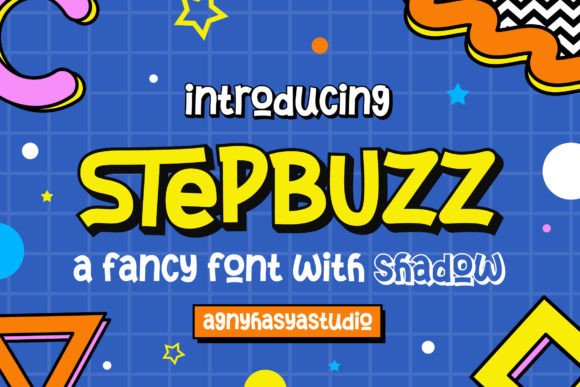
As a small business owner who’s designed everything from coffee bag labels to Instagram story templates, I know how much a single font choice can shape how customers perceive my brand. Stepbuzz isn’t just another decorative typeface—it’s a thoughtful, playful display font that adds warmth and personality without sacrificing professionalism. It comes in two distinct styles: Regular and Shadow—each built with alternate characters and smart ligatures that give your text subtle rhythm and charm. That means when you type “Hello” or “Made With Love,” the letters connect and flow like hand-crafted lettering—not stiff or robotic, but intentional and inviting.
What makes Stepbuzz especially useful for small businesses is its balance of fun and function. Its rounded forms and gentle curves feel friendly and approachable—perfect for brands that want to stand out on crowded shelves or busy social feeds. Think of a handmade soap label where “Lavender Dream” pops in Stepbuzz Shadow, paired with a clean sans serif for ingredients. Or a boutique café menu where “Daily Special” appears in Stepbuzz Regular above a minimalist list of sandwiches and pastries. In both cases, Stepbuzz acts as your visual handshake: warm, memorable, and unmistakably *you*.
Because it’s a display font—not meant for long paragraphs—Stepbuzz shines where attention matters most: logos, product names, signage, website banners, email headers, and social media graphics. On a sticker for a children’s activity kit? Yes. On a limited-edition candle jar label? Absolutely. As the headline font in a Pinterest-worthy DIY tutorial graphic? Perfect. Its shadow variant adds instant dimension for packaging mockups or digital ads, while the regular version keeps things light and breezy for seasonal promotions or handwritten-style thank-you cards.
Consistency is where Stepbuzz truly earns its place in your branding toolkit. When you use the same expressive display font across your Instagram posts, product tags, and storefront sign, customers begin to recognize your voice before they even read the words. That recognition builds trust. A local pottery studio using Stepbuzz for their workshop title (“Clay & Joy”) and event flyers signals creativity and care—qualities that translate directly into perceived value. Likewise, a wellness coach pairing Stepbuzz headlines with a calm, readable serif font for blog posts creates contrast that guides the eye while reinforcing a balanced, grounded brand identity.
Readability matters—even in playful fonts. Stepbuzz holds up well at medium-to-large sizes across print and screen. On a 2-inch product label? Use it for the brand name only—not the fine print. On a mobile-optimized website banner? Keep it at 48px or larger for clarity. In Instagram Stories, test how it renders at thumbnail size: if the ligatures blur or the spacing feels cramped, scale back slightly or tighten tracking in your design app. Always preview on actual devices—not just desktop previews—especially for social content where legibility happens in under three seconds.
Pairing Stepbuzz thoughtfully is key. Because it’s expressive and decorative, it works best alongside neutral, highly legible typefaces. Try it with a friendly sans serif (like Inter, Poppins, or Montserrat) for body text, buttons, and contact info. For a more refined look—say, for a luxury skincare line—pair it with a soft serif (like Lora or Cormorant Garamond) to create elegant contrast between personality and polish. Avoid stacking multiple decorative fonts; Stepbuzz already carries plenty of character on its own.
Before rolling Stepbuzz across your entire brand, test it in context. Drop it into a real product label mockup. Paste it into a Canva Instagram post template. Print a business card sample. See how it feels next to your logo colors and photography style. Does it enhance your message—or compete with it? If you’re launching a new line of greeting cards, try Stepbuzz for the front sentiment and switch to a simple sans serif inside for the message. That kind of intentional layering makes your design decisions feel deliberate—not decorative.
Licensing is practical, not optional. Stepbuzz is a commercial font, and using it on physical products (like t-shirts, mugs, or packaging), digital templates you sell, or client-facing materials requires a proper license. Most reputable font vendors offer clear commercial licensing tiers—some include unlimited use for your own business, others cover client work or resale. Double-check the license terms before applying Stepbuzz to merchandise, Shopify product pages, or downloadable Canva templates. Skipping this step could mean unexpected fees or rebranding later—and no one wants to redesign all their labels because of a licensing oversight.
Real-world examples help bring it to life. A flower shop uses Stepbuzz Shadow for “Seasonal Bouquets” on their chalkboard sign and matching Instagram highlight covers—then switches to Open Sans for price lists and care instructions. A tutoring service applies Stepbuzz Regular to “Math Made Fun” in their webinar landing page header, while keeping lesson outlines in a crisp, accessible sans serif. Even a home-based pet treat brand uses Stepbuzz for flavor names (“Peanut Butter Pawfect”) on compostable bags—because yes, playfulness belongs on dog treats too.
At its core, Stepbuzz helps small businesses communicate authenticity without overcomplicating things. It’s not about looking “designed”—it’s about looking *intentionally human*. When your packaging, website, and social posts share the same typographic tone, customers don’t just remember your name—they remember how your brand made them feel. And in a world full of noise, that feeling is what turns a one-time buyer into a loyal advocate.
If you’ve been hesitant to use expressive fonts because they felt “too much” or hard to control, Stepbuzz might be the display font that finally clicks. It’s playful—but not childish. Fancy—but not fussy. Fun—but always functional. And when used with purpose, it becomes one of your most reliable design assets for building a brand that’s both recognizable and real.